
Featured

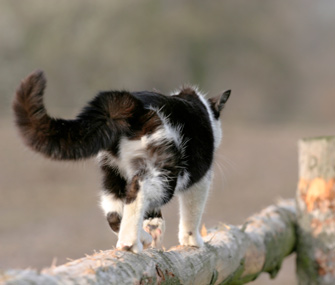
An Indifferent Suburban Feline

An ambulance with yellow flashing lights and moaning horns awakened me late last night. Three men in blue jump suits hopped out of the vehicle and hurriedly entered the house through the screened porch door. A few minutes later, they carried out a man on a flat board. This man had a plastic mask over his white beard with tubing attached to a cylindrical metal cannister. The men lifted him into the ambulance, shut the back doors, and quickly drove away into the darkness.

I had a good sleep after all of that, though. I live in the bottom of a storm drain. It’s safe from people, about 6 feet below the street curb and sidewalk, and difficult for less agile animals to enter. I can squeeze through the small rectangular opening, then jump 6 feet down onto a matted rug of leaves where I make my bed. The drain floods when it rains, so I seek higher ground by creeping underneath a house’s crawl space. The location underneath a house and in close proximity to disposed leftovers makes these spaces popular abodes; they are filled with opossums, snakes, and other animals, leaving little vacancy for others. I prefer the seclusion and dignity of the storm drain.

I yawn, deeply arching my back, extending my legs, flexing my claws and pointing my head toward the storm drain’s slotted steel roof. Quietly and effortlessly I spring up to where the drain meets the road and my claws grab onto the concrete, just enough for me to pull my body to street level.  Carefully scanning through the small rectangular storm drain opening, I don’t see any people, dogs, or cars. I walk cautiously and alertly onto the narrow sidewalk.

It’s a crisp spring morning and the sun is just starting to rise. Mourning doves sing. ‘Coooo cooooo’.  I admire the early morning’s flaming orange and red horizon. The street is lined on each side with large, 3 story homes, yards decorated with tulips, black-eyed susans, daffodils and purple daisies.  White dogwood flowers bloom. Japanese Maple trees are sprouting light burgundy leaves from their branches, and magnolia trees’ green waxy leaves shine in the sun. 

A small pond sits just behind the street’s cul-de-sac with surrounding pine trees and a single-track walking trail.  Many insects live by the pond, and I enjoy hunting and eating them. Birds sing within the tree line near the pond, and a light breeze carries floral scents. The sun’s full light reflecting off of the placid pond and down the street exposes the suburban world’s details.

Peering at the street from behind a pink rose bush, I see a pair of humans walking side by side on the sidewalk. They both wear white masks over their faces and walk quickly, looking down at the sidewalk. Further down the street another pair stands outside of an open garage, inspecting a bicycle.  They wear masks, too. Other masked people walk their leashed dogs, all keeping far away from each other. 

A different group of masked men and women in long-sleeved yellow shirts and thick tan pants wield loud machines around the houses.  They use their machines to cut dark green grass and blow leaves.  One man stands atop a ladder, trimming crepe myrtles.  They wear goggles and masks.  These machines are the only noise to be heard outside songbirds’ chatter. 

Peering into windows along the street, I notice adults perusing smartphones, talking and laughing into their computer, and sitting in silence staring out of a window. A masked man sitting on his steps tells a neighbor on the sidewalk that he missed seeing his daughter’s graduation. ‘This makes me so sad and so angry’, he says.

Dusk falls.  On cue, I hear a wobbly voice from the end of the cul-de-sac sing “KIIIIIITTTYYY.  DIIIINNNNEERRRR!”. Keeping low to the ground and out of sight, I run to her porch, weaving in and out of Bradford pear trees along the sidewalk’s edge.

She gives me food every day. She has whitish gray hair and stoops over her cane while walking. She wears thick glasses, precariously hanging over her nose, a cotton dress hanging to her ankles. Her grey hair stands firm, freshly curled. She smiles whenever she sees me and often extends a supinated hand. I’ve let her touch my nose before. She slowly bends over and the places down scrambled eggs, mounding out of a thin porcelain teacup painted in 19th century Japanese fashion. I voraciously consume the eggs, leaving the teacup’s inside shining clean.

Sated from the scrambled eggs, I wander out into the quiet, tranquil evening to hunt crickets and grasshoppers. Bullfrogs call from the pond and cicadas sing in oscillating unison. I hear deer feet crunching underbrush through the woods. A family of fox lumber through thorns and poison ivy. I crouch down among the pond’s pines, curl into a ball on top of a bed of dried leaves and close my eyes.
Featured

The Turtle Race

Each July, the local volunteer fire department hosted ‘The Great North American Turtle Race’, a day-long event. The Races were held at a boat harbor situated off of the Nanticoke River, a major tributary flowing westward into the Chesapeake Bay. The Turtle Race served as a large fund-raising event for the volunteer fire department, bringing in well over $10,000 in revenue each year from beer and fried oyster sandwich sales.

The Turtle Race was a day-long festival featuring a 5-kilometer jog, a sailboat race, a wet t-shirt contest, canoe jousting, live music, a boat docking competition, a dunking booth, and various other carnival activities.  For kids and adults alike, the Turtle Race was one of the year’s most highly anticipated events. On race day, farmers would take a rare break from the corn and soybean fields to mingle with their neighbors, celebrate their community and pay tribute to the fire department volunteers who protected their homes.  This was also a day where kids could lawlessly eat candy, drink sugary soda, zigzag through crowds on bicycles, and engage in general mischief and rudery.

Anyone could enter the Race; you just needed a turtle.  I would start carefully scanning the road’s shoulders for my racer in May or June, hoping to find a turtle early to get a head start on training.  I was too young to drive, but could quickly get out of the car, pick up the turtle, and hop back in when I could convince Mom to pull over.

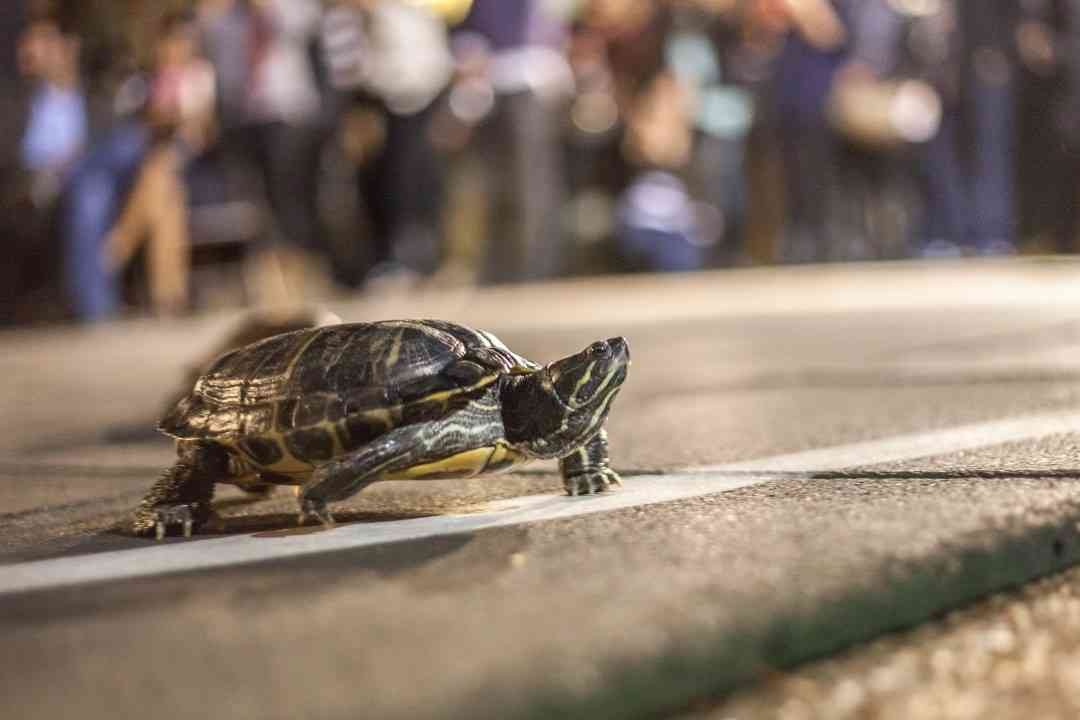
Box turtles, frequently found in drainage ditches and irrigation ponds, were the most common type to come across.  A turtle racer’s most valuable find, however, was a water turtle.  These amphibious river dwellers were built low to the ground to maximize hydrodynamics, their powerful legs propelling them about as fast as a loping 2-legged dog.  Pretty good for a turtle. This was in sharp contrast to the Volvo shaped box turtles that moved at a clunky snail’s pace.

In 1987, a caravan of small vendors descended on the Turtle Race, their target customers being young boys aged 11 or 12. These merchants brought bull whips, gun powder ‘poppers’, toy swords. All for sale. The access to these toys, along with the overall electric atmosphere, brought our confederation of kids into an almost a frenetic state.

It was late afternoon and we were in high spirits watching the wet t-shirt contest finale, knowing the turtle race competition was next. The race was held in the middle of a large asphalt parking lot. A large circle, about 100 yards in diameter, had been drawn with chalk. In the center was a small, 3-foot in diameter ring where the racers would begin. The first turtle to cross the large outermost circle was the winner.

People gathered around the outside of the racing area to watch.  Spectators stretched 4-5 people deep and little kids were held on their parents’ shoulders for a better view. The grand prize for the winner, a comically large trophy about twice my height, had been on display all day.

In an attempt to intimidate other racers, several contestants had gone to the trouble of gluing plastic engines or capes on their speedy river turtle’s shell. “That must give them a major advantage”, I thought, looking down at my sedate box turtle and wishing I had been better prepared.

A washtub whose bottom had been sawn away was placed over the center ring. I, along with my fellow competitors, placed our racers into the washtub and onto the asphalt. When all turtles were ready, the head officiator lifted the washtub and the cheering commenced. Most turtles began walking, some faster than others, making their way towards the outer ring. Contestants lining the racing ring screamed for their turtle to trudge faster, cursing in frustration if their racer refused to walk. Unfortunately, my racer, perhaps realizing his chances of winning were low, shut his shell and stayed exactly where I had set him down. When the winner finally crossed the finish line, party-goers erupted in raucous cries of approval. The fire chief presented the winner, a teenager who travelled from New York, with the monstrous trophy.

That was 1987 and times, as well as values, change. 

In 2005, years after I had left my hometown for college and medical school, People for the Ethical Treatment of Animals (PETA) an entirely unknown, unengaged and foreign entity to the people of the Delmarva Peninsula, threatened legal action against the local fire department, citing complaints of animal cruelty.  The fire department had virtually no money to defend themselves in court against this charge, so they agreed to no longer hold the event.

And so, despite the best of intentions, the Great North American Turtle Race (along with the community festival, along with fund raising opportunity for the fire department) vanished into thin air.

Featured

Snowballs

“Let’s throw snowballs at cars.  Mom’s not home so we won’t get in trouble.”  

It was 9AM and school had been unexpectedly cancelled because of a winter storm.  Will and I were eating cereal while plotting our day’s plans.  The pristine fresh snow glowed with possibilities. 

Will was my sworn best friend.  Like many 9-year-old duos, we spent magical days exploring our world.  We lived in a small, rural, close-knit town, population about 100.  Most everyone knew each other, and people felt comfortable leaving their doors unlocked at night.

“We can hide behind the sign in front of the church.  C’mon!  It’s perfect packing snow!”

Will solemnly nodded, committed to partner in these hijinks.  Trudging purposefully through the snow, like penguins in our thick layered winter clothes, we made our way to the church adjacent to my home.

The small church was situated on a 90-degree corner, a point where cars were forced to slow down.  The church itself stood towering over the road.  It was on top of a hill with a brick walkway, now covered in ice, leading from the road to the church. 

We assembled our arsenal of snowballs and placed them on the ground, just behind the church sign.  Then we took our hiding places out of view from the road. 

After about 10 minutes, we heard the sound of crunching ice on the road, getting louder and louder.  And the sound of a car engine.  Here we go!  It was hard to even pick up the snowball because I was already laughing so hard.

We sprang, snowballs in hand, from behind the sign to see a white compact car creeping along the road, rounding into the corner. 

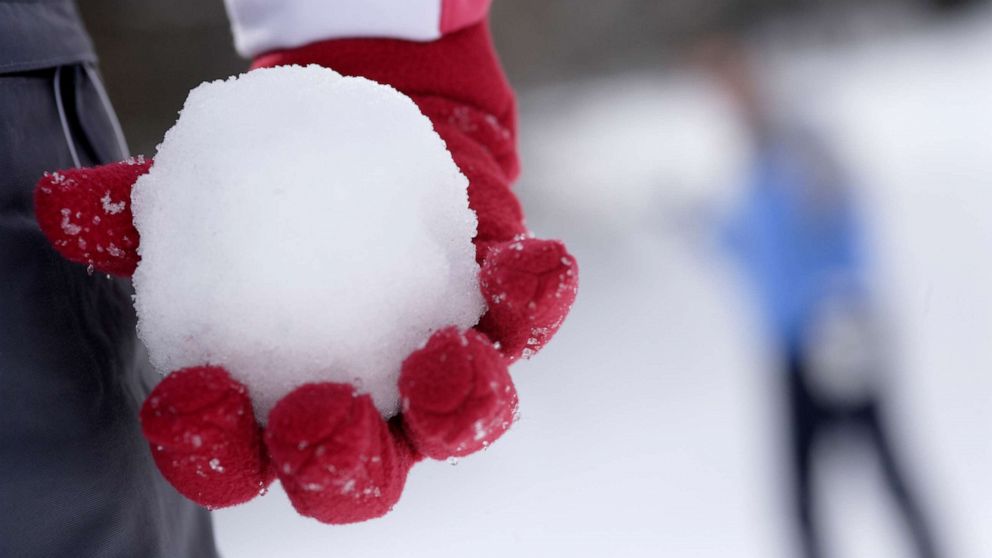
I took aim and threw as hard as I could .  Will did the same.  ‘PFFT PFFT PFFFFT’, snowballs exploded into tiny white clouds against the driver’s side door.  I belly laughed, tears rolling down my cheeks, trouble catching my breath from the laughter.

Then brakes screeched and the car skidded to a stop.  Then the high pitched engine’s whir as the car, now in reverse gear, backed up to us.  This was the reaction we were looking for.

The door flew open and a young man exited, eyes squinting to see us through the snow’s reflection.  Confident that he would remain next to his car, we continued to laugh while he scolded us about being irresponsible.  But then he started walking towards us.  Then running towards us.  Will and I locked eyes.

“Oh shiiiiit!!” I screamed and started running as fast as I could away from this man.

It feels like we ran a mile, finally stopping in a brushy area behind my house.  We had lost him.  Belly laughter resumed.  We had won this battle against the adult world, adults who always took things too damned seriously.  We were happy with ourselves for the rest of the day. 

And Mom never did find out. 

A little person that I see

Have I heard voices? No.

Have I seen things that aren’t there? No.

But I’ve seen something that some people would say isn’t really there. He’s a miniature person that lives in a wooded hole behind my house. Does that count?

Yes? Okay…

I haven’t told anyone else about this. Because people are going to ask questions and they won’t believe me. And that is going to be frustrating, them doubting me. Because I know that he is real. He has actually been the most important person in my life for the past few months. He understands things that other people don’t and never lies to me.

The first time I met him was a foggy, soggy morning, immediately following a heavy rain the afternoon and night prior. It was springtime and I was taking a walk in the woods as I’ve come to do several times a day. My focus was not on finding anything, in particular, but in escaping into the quiet for a few minutes.

Thirty acres of woods sit immediately behind my home. The woods have barely been touched by humans over the last 50 years, and there exists trees of multiple different types, ages, stages of decay and maturity. Maple, holly, oak, pine, sweet gum densely pack the wood. Many dead trees reside here, now lying across the ground and providing root space and food for new trees and vegetation. Peppered throughout are holes are in the ground big enough to accommodate a man’s leg. Root balls once resided here and have since rotted away.

In addition to the trees, the woods are adorned with thick round leaf greenbriar. The briars are so dense that, in the spring and summer, it is difficult to walk in the woods. I’ve cut trails in the back over the last couple of years, though, which allows much easier access. Dried sweet gum seed pods and dried leaves lie in abundance on the ground, forming the woods’ floor.

His home exists inside of a now empty root hole from a maple tree fallen several years ago. The hole is only about 2 feet across. There is a thick root from an adjacent tree that wraps around the top of the hole, giving it stability from caving in from the sides. The hole goes down about a foot before breaking off into 4 smaller holes which dive deeper still. These holes are remnants of the initial root branches and serve has different wings of his shelter.

It was during spring that I first met him. The tiny man. The briars were low and it was easy to trek into the far eastern part of the wood. That’s where he lives. I was sitting on a large fallen sweet-gum, moss overlying bark on the top half, bark stripped away on the half closer to the ground. From here, I stared down into a particularly deep root hole. From deep in the hole I noticed a flickering, then clearly a small light, then an arm and shoulder. A little man, no bigger than my index finger, was looking up at me.

This little man, were he to be human size, is probably in his mid-40s. He wore denim pants and a flannel shirt. His face was soft and relaxed, like he had seen me before. I felt scared. How could I be seeing such a miniature person, I must be going crazy! But he was as clear to me as the trees and moss all around that I know by faith and science to be real. And I relaxed, I think partly due to his calmness.

This began a ritual whereupon I would meet this man every morning before the sun rose. And I would talk to him of my concerns, small and large. And he would listen wisely, occasionally giving advice. I felt comfortable with him.

The man has been my sounding board for a lot of different ideas and concerns that I’ve had. He listens and only interjects or says something if he truly feels it is of great important. And I appreciate that, given how people can be with their yammering. I look forward to our talks more than anything else. When we are talking I hear truth and he understands me.

He tells me to quiet my mind and take deep breathes in and out. He tells me that of course I am not in control of life’s events. Be happy and content with simply experiencing life. I don’t think he understands my little worldly worries about paying bills and the state of international affairs. He doesn’t understand because he doesn’t exist in that world. But he sympathizes greatly with me and can feel my pain. He knows that life is pain.

I’ve learned from him not to worry about what I think others are thinking. These thoughts are not reality. I can free myself by letting go of false expectations that I carry. That I didn’t even know I was carrying. I am no more or less significant than any other living thing. That will become apparent before this part of our journey ends and the next begins. Time, in its constant march forward, is not real. There is only the infinite moment.

You carry these false beliefs, too, you just probably don’t know it. You would enjoy meeting him.

So, no. I haven’t heard voices but I have met this man. You can understand, I‘m sure, why I haven’t told a lot of people about him. If people find out about him, they may try to find him and prevent him from telling his truth. You know that people hate the truth.

Do you have anymore questions?

Out of this world 4

Greetings, friends! We are almost halfway through March and spring rapidly approaches. A time for renewal and fresh growth is arriving.

This week, I’ve been thinking a lot about simulation as a teaching technique and how it might fit into the internet’s future aka web3.

I used simulation techniques to teach for a number of years, mostly to introduce technical skills. In education, simulation is defined as “a teaching method that tests participants’ knowledge and skill levels by placing them in scenarios where they must actively solve problems.” Learning objectives such as achieving proficiency at procedural tasks are met in risk-free environments.

Using simulation technique makes learning and training safer. When inevitable mistakes happen, no one is hurt. Identifying these mistakes and teaching learners how to prevent them provides learners with powerful learning opportunities. The medical field and airline industry have made use of simulation techniques in teaching, partly due to the extreme ramifications of mistakes in these fields.

In the medical field, both new trainees and established physicians make use of simulation. For example, all medical students traditionally learn about human anatomy very early in their education. This experience is highlighted by dissecting a human cadaver. Today, augmented reality (AR) equipment exists to replace the need to obtain cadavers each year and provide more standardized instruction.

The airline industry has used simulation techniques to teach piloting skills for many years. Before flying an airplane, pilots spend time becoming comfortable with controls and running through responses to different situations in a simulated aircraft. Wind speed, precipitation, turbulence, and air pressure can all be controlled for various experiences.

A student now dons a pair or AR glasses and the mannequin lying in front of them becomes a cadaver that they can cut and dissect. They can subtract layers of skin, muscle, and connective tissue to work into organ spaces. A student can now pick up the simulated heart and rotate it in all directions to better understand orientation. Text conveniently pops-up on demand to help identify the different chambers and blood vessels surrounding them. Similar learning methods can be used to learn complex nerve and bone structures. There is already a strong emerging market for affordable AR anatomy systems that provide realistic and rich learning experience.

Perhaps we will grow our educational mission in part through simulated activities and techniques. A stimulation platform might be available so that community members can easily share knowledge and skills with each other.

So, how can simulation and the metaverse relate? Will a DAO use simulation techniques to teach its members sundry skills via free online access to educational programs? One might learn how to mint an NFT via simulation. Think of all the simulation enhanced educational programs that might be available. Drawing, skiing, rock climbing, and tai-chi would all be exciting to learn. I would love to learn artistry directly from someone who lives on the other side of the world.

Here’s wishing you all a productive and disruptive week.


A lot of questions, a few visions

Greetings! While deciding on the theme for this week’s column, I’ve been overwhelmed with my own questions. Basic questions about what I am trying to say that will be of value to the group’s purpose as well as my own mission. About why am I exploring DAOs and cryptocurrency in the first place (I’m a scientist and educator by trade).

I’ll use this week’s column to express several questions that I have, then hope to address them in future editions as I continue to grow and learn about the metaverse and DAO opportunities.

This week I’ve been learning more and more about DAOs and particularly thinking about the ‘decentralized’ aspect. An entrepreneur may see a DAO as a vehicle to accelerate project development. No doubt that they are revolutionary in concept, and the paradigm of decentralization plays well to independent builders of different varieties. While this lack of centralization gives the DAO a great deal of strength, it also presents it with challenges in how to operate the organization.

How will decentralization be balanced with essential central decision making? How will the DAO sharpen both a broad and narrow focus so as to innovate and explore while also getting stuff done?

What’s more, the effectiveness of a DAO to make decisions for the group will largely be determined by its self-coded bylaws. Laws made by DAO creators to “keep us from doing evil shit’, as Rogi said on Friday’s awesome Twitter space.

How can we create bylaws so as to prevent the less honorable but very real parts of human nature from emerging? How can we do ‘good stuff’ in a DAO that helps others and gives us a sense of fulfillment? How can DAOs connect with one another and support each other toward achieving their goals and inter-DAO collaboration?

More specifically, if you read Jkey’s piece in CommLink2, you will get a nice bullet-point overview of the Decentralized Science (DeSci) movement. How can we use science to make our lives better? And what does a better life mean to me? Or you? Or all of us together, as a group? We know there are for-profit DAOs and charitable DAOs. Can we make a for-profit DAO into an entity regularly accomplishing charitable deeds?

How can we help others in need? And when we do, who should we help first? Could it be through innovative education? Looking beyond our immediate goals, it may be a community decides to invest in DeSci research or educational development (eg edudao.org).

The DAO’s community and leadership will decide answers to these questions. The makeup of our community at liftoff is extremely important for future organizational accomplishments.

Imagine educational systems functioning as a DAO. Where students and faculty weigh options together and vote on curricular development. Currently, students pay tuition money and faculty decide what they will learn. An educational DAO may be more empowering than buying entrance to a program under a centralized Dean’s office. Similar to how investing in a DAO can be more empowering and satisfying than buying stock from a CEO.

The present is a time of great upheaval and change. So while continuing to learn about gas fees, tokens, cryptocurrency, and DAOs, I also will strive to pay attention to the many great unanswered questions and opportunities in play. And the potential for worldwide community revolution to help live better lives.

In the meantime, I will keep asking questions and also try to answer a few. And if you have answers to any of these questions, please message me or share them!

Until next time, House DOCMikeG


Profound connections

Simple conversations with strangers can be profound.  I had such a conversation with a 40’ish something year old man today.  I’d seen him before at my local workout facility; thin, hair graying, brown eyes tired but engaging.  He usually smiled while emptying trashcans and cleaning the gym showers.  I had never talked to him.

He walked up to me, smiling.  “You’re working out hard today!”, he said, noticing my shirt sticking to my skin via a thick coating of sweat. 

“I work like this to keep my mind good”, I told him.  “I get down sometimes.  Moving my body helps.”

He paused, smile dropping, and looked deeply into my eyes.  “Man, I’ve been real down, depressed.  Everything goes bad, I had to fight for custody of my kids, I got in trouble with the law and incarcerated.  I stayed out in my garage drinking”.  He looked at the ground, then back at me.   “I’m better now, though”.

“How did you get better?”

“You just gotta throw your problems up to God. Let Him handle it.  Nothing we can do, anyway.  And I push those bad thoughts away when I get ‘em.”

“Do you ever think,” I asked him, “that God talks through you, and you through me?  All of us when we talk to each other?”

“Yes, God is within us all” he said slowly with a smile.

We parted ways, him to continue working and me to finish exercising.

One of the worst parts about depression is the feeling of isolation, like no one understands or identifies with what you’re going through.  Like you’re going it alone.

Openly sharing my experiences and carefully hearing others’ helps me realize that we’re not alone and all of us, no matter our context, are sharing the great experience of life, with all of its ups and downs, moments of doubt and leaps of faith.